
May 22, 2026
Basement Renovation Toronto 2026:
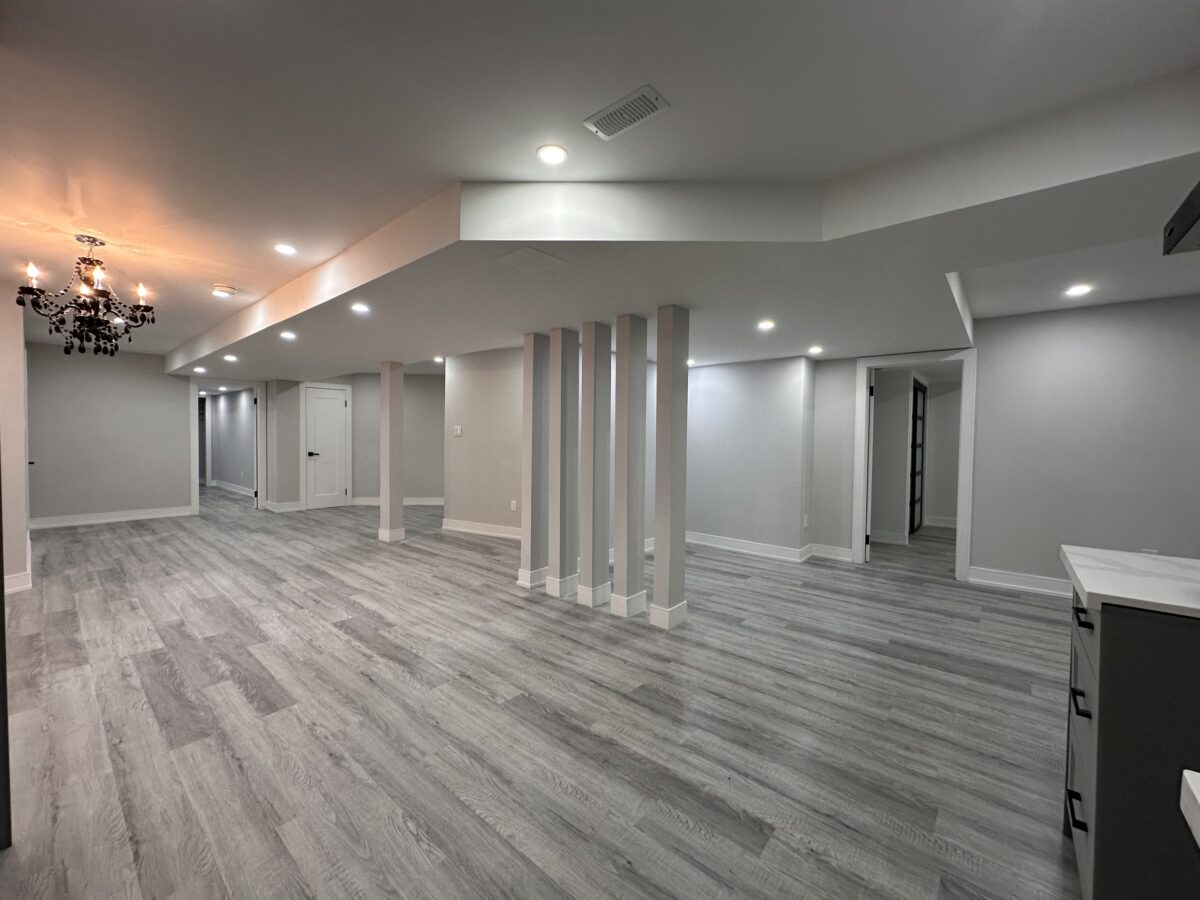
Cost & Second Suites.What a basement renovation really costs in Toronto in 2026, plus how to build a legal second suite. Real numbers, permit rules, and Toronto-specific issues to plan for.
Basement Renovations in Toronto: 2026 Cost Guide and Second Suite Potential.
If you own a house in Toronto and your basement is still framed in 1970s wood paneling, you’re sitting on what might be the single biggest opportunity in your home. We get more calls about basement renovations than almost any other residential project, and the reason isn’t just extra living space. It’s income.
Here’s what’s actually happening with basement renovations in Toronto in 2026, what it costs, and what you need to know before you decide between a “family basement” and a legal second suite.
Why Basement Renos Are Booming Right Now
A few things came together at once.
Toronto home prices haven’t dropped enough to make moving up an easy decision, so instead of trading up, owners are building down. A finished basement adds liveable square footage at a fraction of the price of an addition.
The City and Province have also made it significantly easier to add a second unit. As-of-right zoning across most of Toronto now permits a basement apartment in a single-family home, provided it meets code. Garden suites and laneway houses get most of the headlines, but the basement suite remains the most cost-effective income unit you can build on an existing lot.
And rents in Toronto are still high enough that a properly built basement apartment can pull in $1,800 to $2,800 per month depending on neighbourhood, size, and finish. Do the math on a $120,000 build over ten years and the answer usually makes sense.
The First Decision: Family Basement or Legal Suite?
These are very different projects with very different price tags. Be honest with yourself about which one you actually want before you start.
Family basement is for your use. Rec room, gym, home office, kids’ space, maybe a guest bedroom and bathroom. No separate entrance required. No fire separation rules between units. Less ductwork. Less mechanical work. Simpler permit path.
Legal second suite is its own dwelling unit. It needs a separate entrance, full fire separation between units, code-compliant ceiling heights, code-compliant egress windows in bedrooms, its own kitchen, its own bathroom, and either its own HVAC zone or a compliant shared system. Permits go through the City’s Additional Residential Unit (ARU) process.
Both are worth doing. They cost very different amounts.
Real Cost Ranges in 2026
Family basement (unfinished to finished)
$55,000 to $110,000 for a typical 800 to 1,200 sq ft basement with one bedroom, a bathroom, a rec room, decent finishes, and proper insulation and waterproofing where needed.
Legal second suite
$110,000 to $200,000+ depending on whether you need to underpin or bench for ceiling height, add a separate entrance, upgrade electrical service, and meet full fire and ARU requirements.
The biggest cost swings on a Toronto basement renovation are:
Ceiling height. Code minimum is generally 6’5″ for living areas in a basement suite.
A lot of older Toronto homes (Junction, Riverdale, Leslieville, the east end, parts of the west end) come in at 6’2″ or less. You’re then looking at either underpinning (lowering the floor by digging out, $30,000 to $80,000+) or benching (building an interior bench wall and lowering only the centre, less common now). Underpinning also strengthens the foundation, which is a real win, but it’s a major job.
Waterproofing. Toronto’s older neighbourhoods often need interior or exterior waterproofing before any finish work goes in. Budget $8,000 to $25,000+ depending on the home and approach.
Separate entrance. Cutting a side walk-out or rear stair to grade is $15,000 to $35,000+ depending on the site and the soil.
Electrical service. Plenty of older Toronto homes are still on 100A service. A legal second suite often needs an upgrade to 200A plus a sub-panel for the unit. Add $4,000 to $8,000.
Permits and Code: What You Can’t Skip
Toronto enforces. Insurance companies are increasingly asking. Mortgage lenders ask. Future buyers absolutely ask.
For a legal second suite, you need:
A building permit
Compliance with the Ontario Building Code requirements for second units
Registration as an Additional Residential Unit (ARU) with the City of Toronto
Fire separation between units (typically 45-minute rating, sometimes more)
Interconnected smoke and CO alarms across both units
Egress windows in all bedrooms meeting size requirements
Code-compliant ceiling height
HVAC that meets code for the unit
Going unpermitted on a basement apartment is a common shortcut. It’s also one that costs people a lot when they go to sell, refinance, or file an insurance claim. Our advice is always the same: do it once, do it legal, and capture the actual value of the suite in your home’s resale and insurance.
Common Toronto Basement Surprises
A few things we run into often on Toronto basements, especially in homes built before 1970:
Knob-and-tube wiring that needs to come out for insurance
Cast iron drain stacks that really should be replaced while the walls are open
Asbestos in older vermiculite insulation or pipe wrap (needs testing and abatement)
Foundation cracks that aren’t structural but need to be addressed before finishing
Low headroom under ductwork, beams, or sanitary stacks
We always recommend a proper pre-construction site visit and a budget contingency of 10 to 15 percent for older homes. Surprises are normal. Big surprises are usually only big if you didn’t plan for them.
Timeline
Standard family basement renovation: 8 to 14 weeks
Legal second suite, no underpinning: 12 to 20 weeks
Legal second suite with underpinning and a separate entrance: 5 to 8 months
Permit timelines in Toronto have improved a bit in 2026, but plan for six to twelve weeks for a second-unit permit depending on the complexity of the application.
FAQ
Do I need a permit for a basement renovation in Toronto?
For a simple family basement with no plumbing changes and no new bedrooms needing egress, sometimes no. For almost everything else, yes. Always pull the electrical permit at minimum.
How much does it cost to underpin a basement in Toronto?
Typically $30,000 to $80,000+ depending on size, soil, and access. It’s a major job and should only be done by a contractor experienced with it.
Can I legally rent out my basement in Toronto?
Yes, if it’s a legal second suite that meets code and is registered as an ARU. Renting out a non-compliant unit creates real legal and insurance risk.
Will a finished basement increase my home value?
A finished basement adds value. A legal income suite adds more. An illegal suite can actually subtract value at sale time.
How long does a basement renovation take in Toronto?
A family basement runs 8 to 14 weeks. A full legal second suite, especially one needing underpinning, can take five to eight months.
Thinking About a Basement Renovation in Toronto?
Bentmoon Construction is a Toronto general contractor and construction manager with experience across residential renovations, including basement finishing, underpinning coordination, and full legal second suite builds. We help homeowners decide between a family basement and an income suite based on what actually makes sense for the property and the budget.
If you’re thinking about your basement in 2026, get in touch for a no-pressure site visit and a real number.